
Blog
Methodology notes, replication memos, and short pieces on the mechanics of modelling human physiology. Citation-heavy by design.
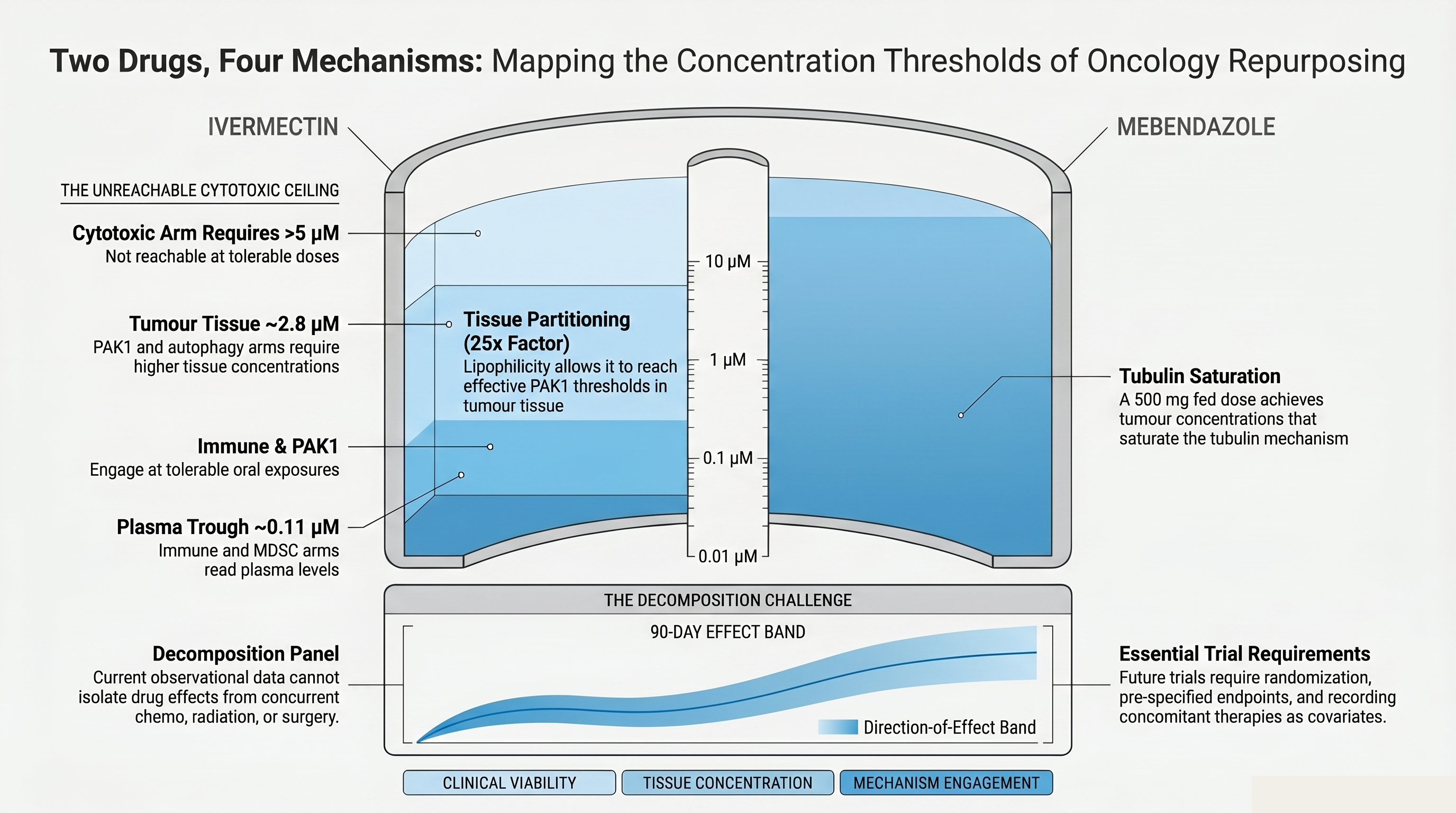
Repurposed antiparasitics in oncology: what the mechanism predicts
Ivermectin and mebendazole both have anti-cancer mechanisms that are active at concentrations reachable with oral dosing. The composed body model predicts a real but modest combined effect at 90 days — far below the headline numbers in current observational reports. The trial that would distinguish drug effect from concomitant therapy has not been run.
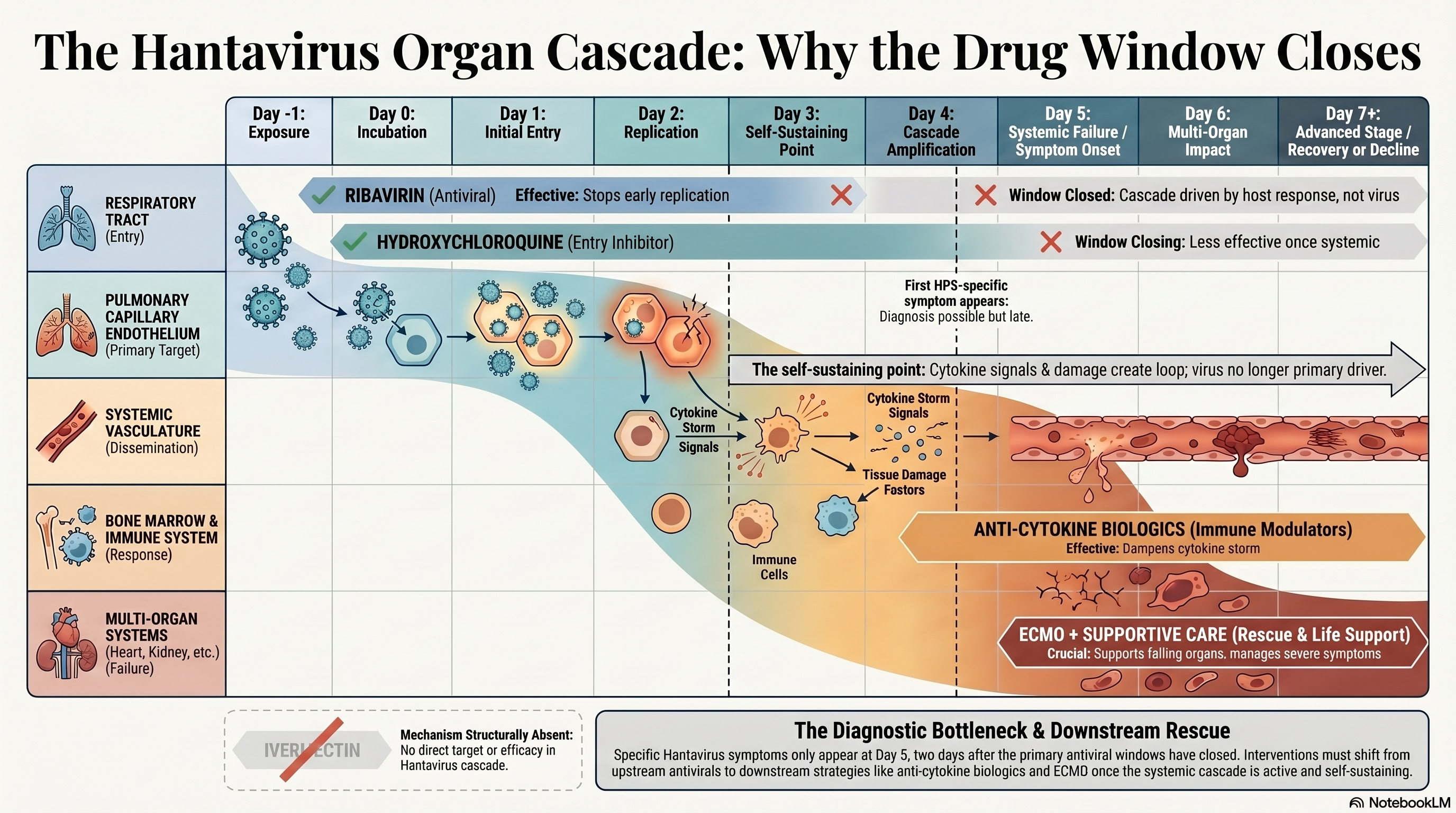
Hantavirus: the cascade that decouples from the virus
Hantavirus does not kill cells directly. It kills by triggering a cytokine cascade that, once committed, propagates organ by organ — lung capillary leak, vascular shock, marrow suppression, lactic acidosis — independently of the virus that started it. The cascade is what makes the timing window structural, not pharmacological.
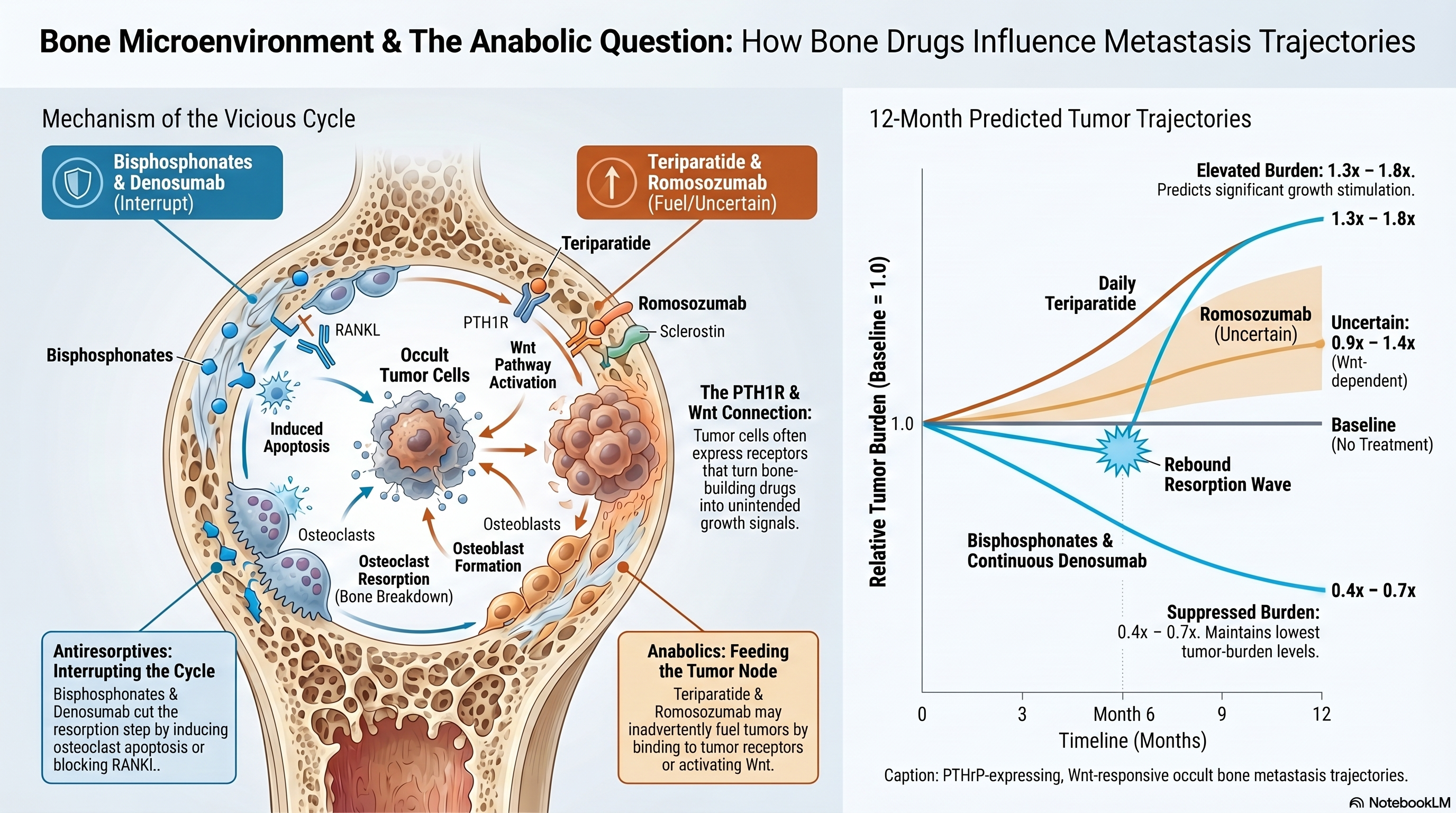
Bone is a microenvironment. Anabolic drugs change who lives there.
Bisphosphonates and denosumab reduce skeletal-related events in cancer with bone metastases. The anabolic bone drugs — teriparatide, romosozumab — have not been studied in patients with cancer at all. The same physiology that builds bone could plausibly feed an occult metastasis. A coupled Lemaire-Pivonka model lets us ask the question the trials did not.
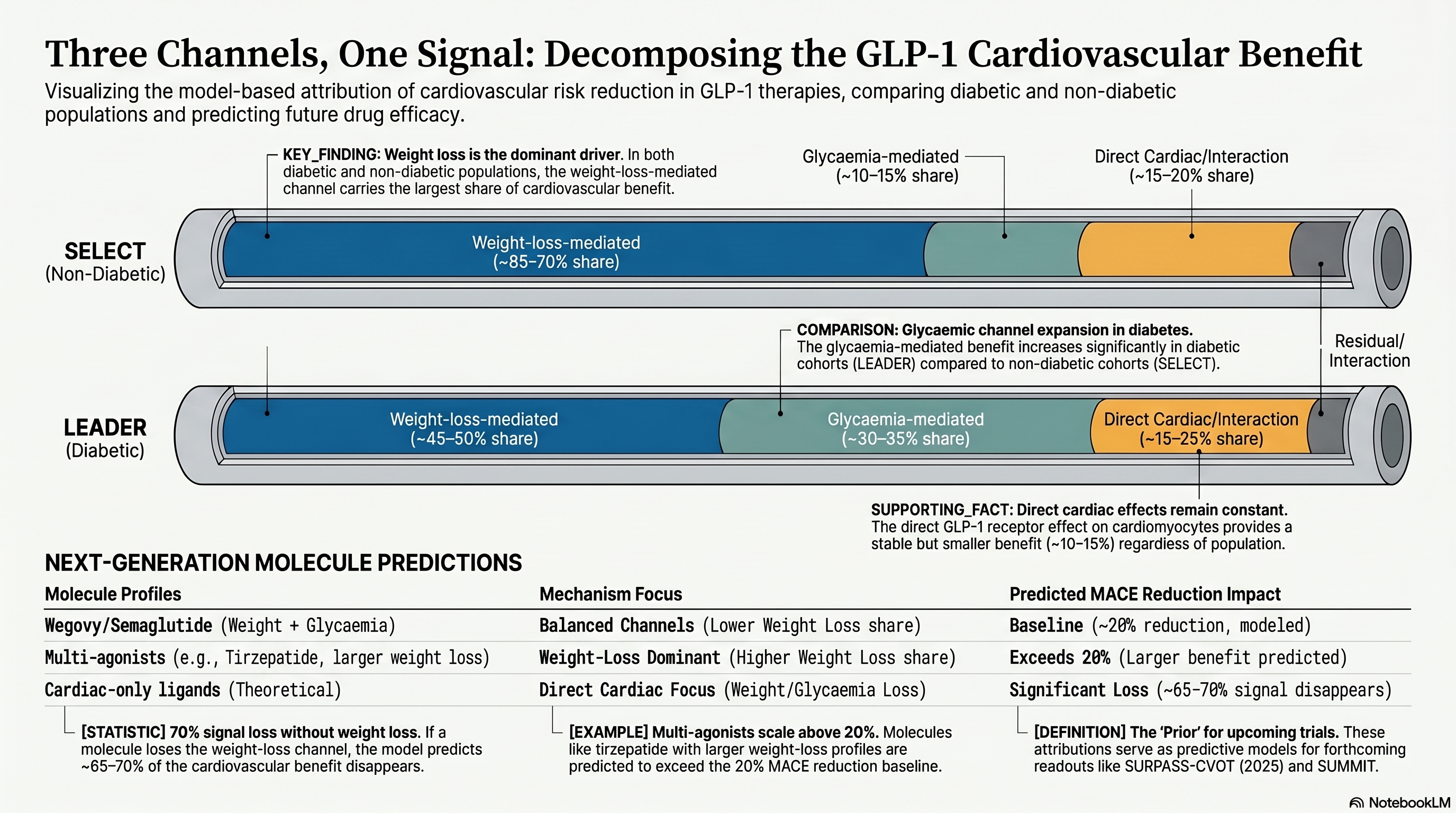
GLP-1s reduce cardiovascular events. The model says the mechanism is mostly indirect.
SELECT showed semaglutide reduced major adverse cardiovascular events by 20% in non-diabetic patients with established cardiovascular disease. Three plausible mechanisms could explain that signal — direct cardiac receptor effects, glucose-mediated, or downstream of weight loss. A coupled body model says the third channel carries most of the effect — which has direct consequences for the next-generation GLP-1-without-weight-loss molecules now in development.
The asterisk on the anti-amyloid Alzheimer drugs
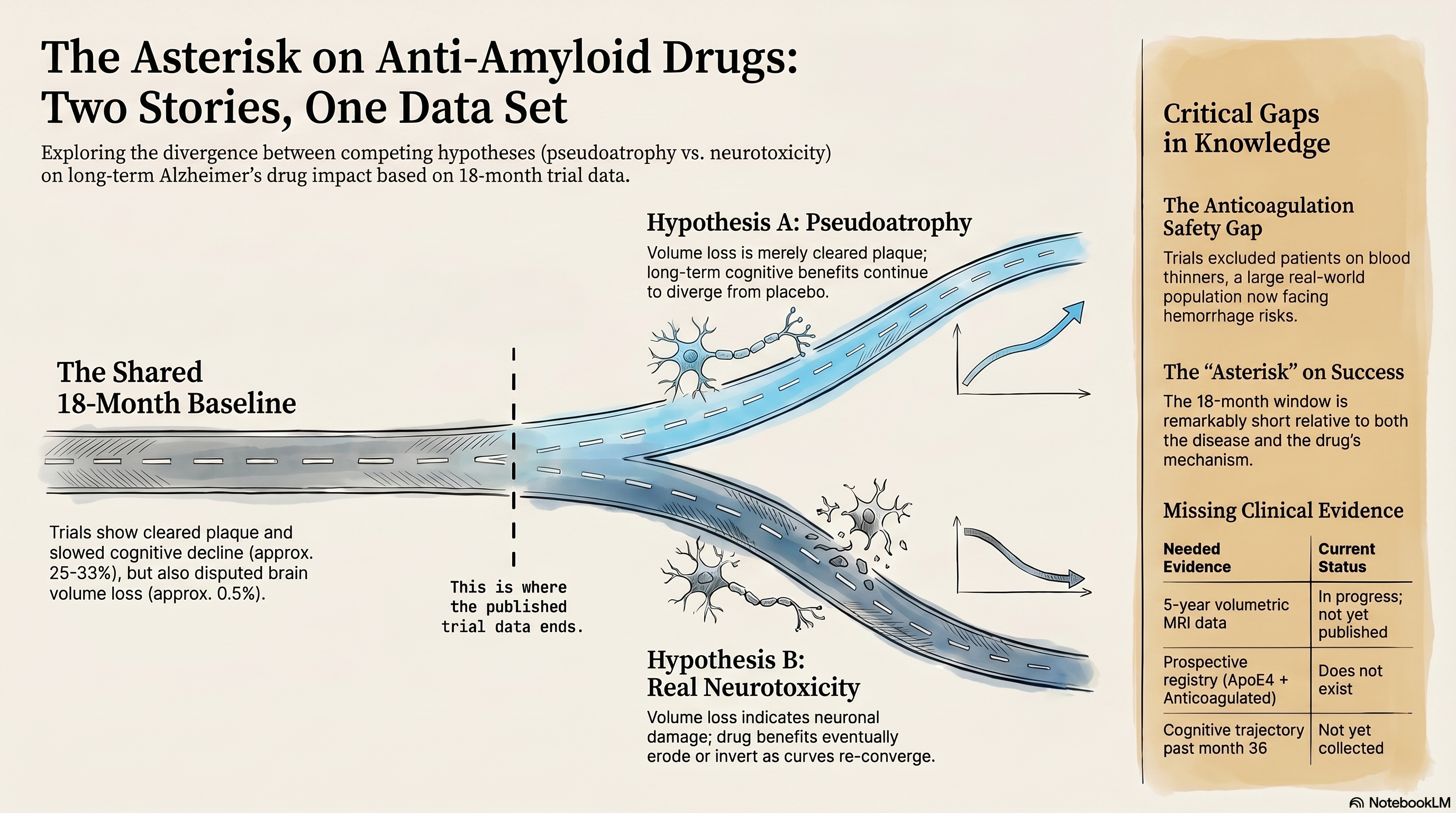
Lecanemab and donanemab reduce cognitive decline ~25–33% over 18 months. They also shrink the brain — by about half a percent of whole-brain volume in the same window. The pseudoatrophy and the real-neurotoxicity hypotheses make identical 18-month predictions. The data needed to distinguish them does not exist yet.
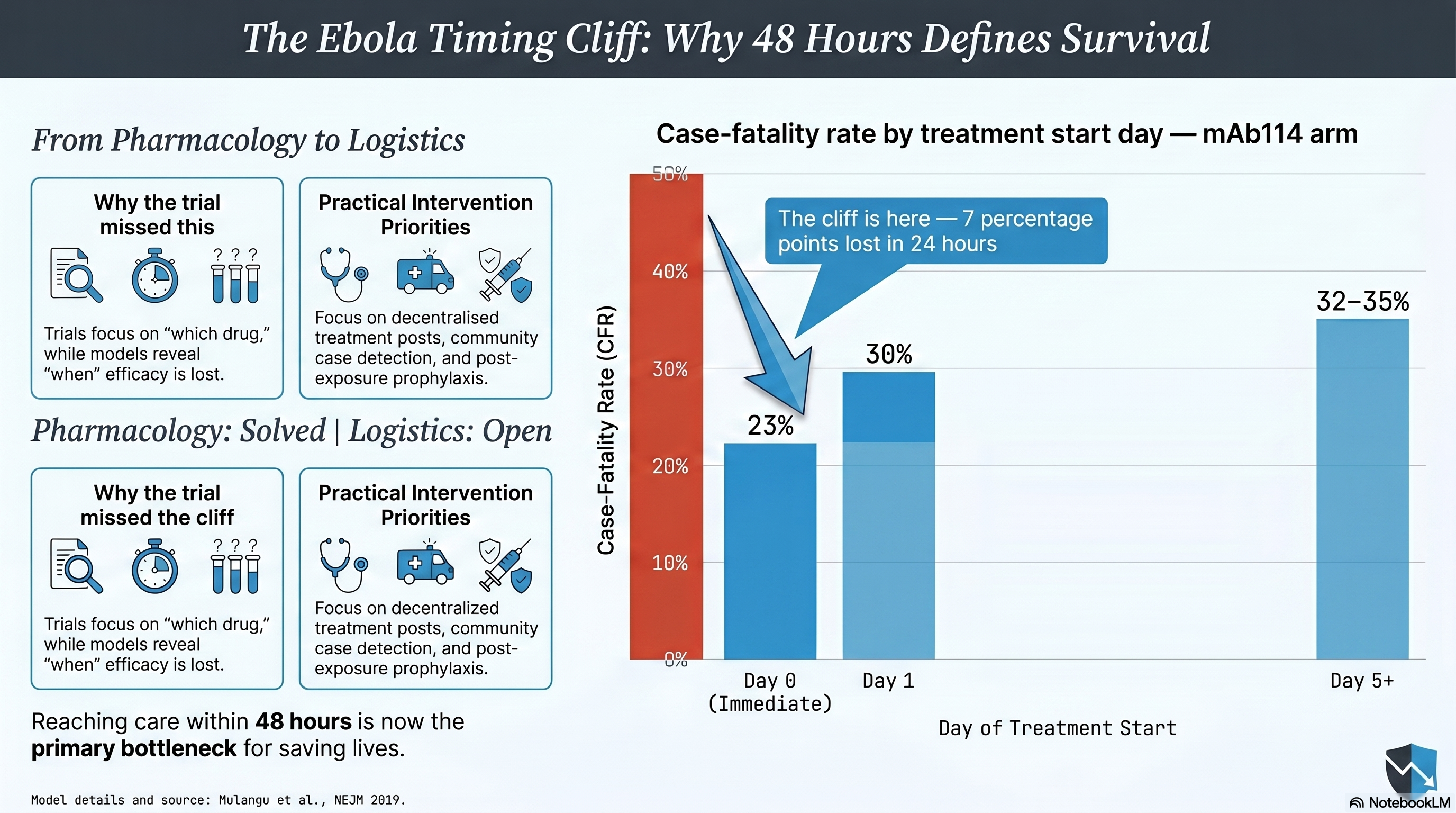
The Ebola drugs work. The timing cliff starts at 48 hours.
The PALM trial established that mAb114 and REGN-EB3 reduce mortality in Ebola. It did not establish how outcomes depend on when treatment starts. A coupled 22-state model, calibrated against all six PALM arms, says the answer is steeper than the field assumes — and the implication is logistical, not pharmacological.
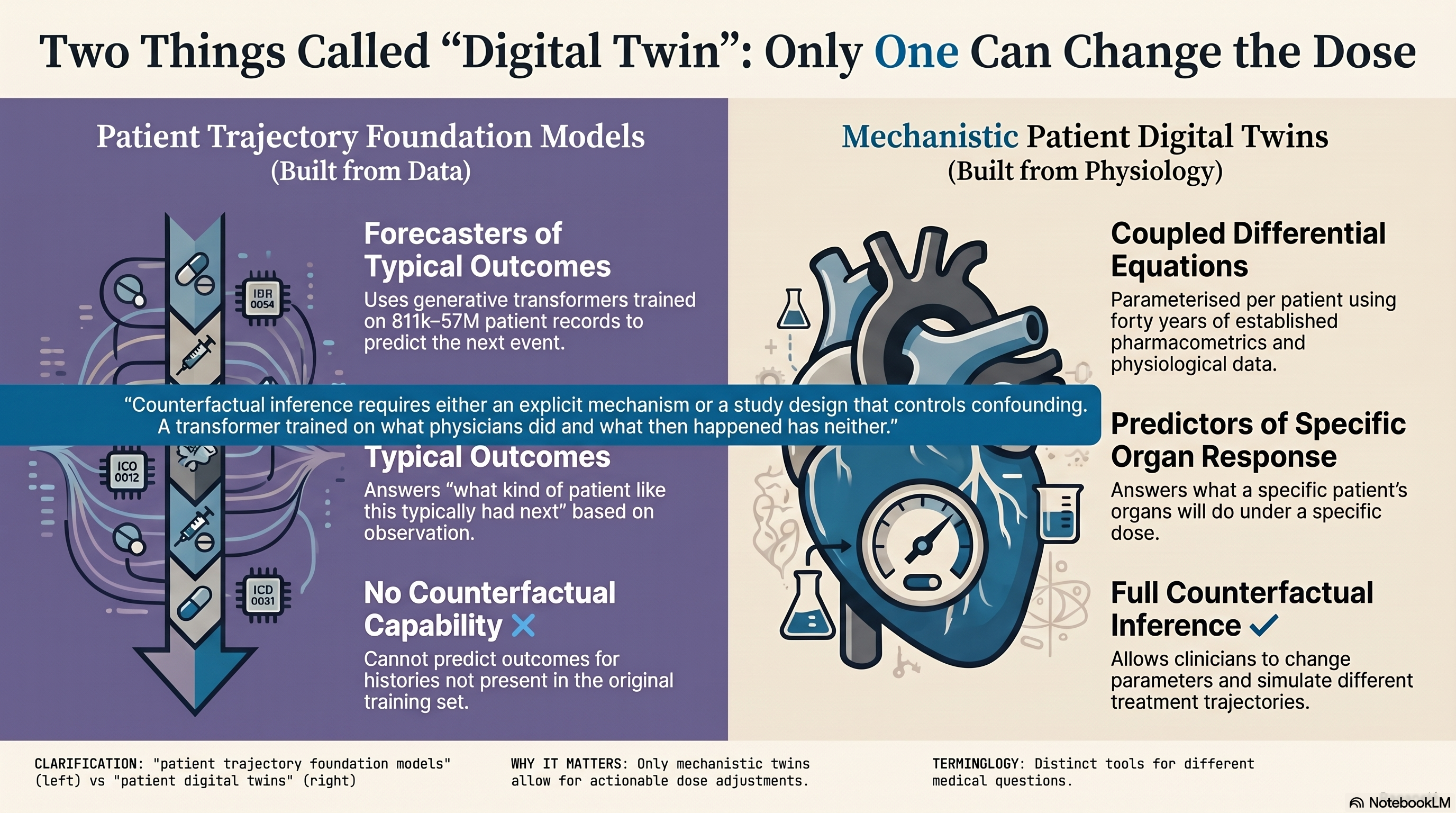
Foresight is a remarkable model. It is not a patient digital twin.
Why a generative transformer over electronic health records cannot answer the counterfactual question every clinician actually wants to ask — and what the engineering definition of digital twin requires instead.